
The United States completed the withdrawal of its remaining troops and coalition equipment from Iraq on Wednesday, September 30, 2026, formally ending the Iraq-based phase of Operation Inherent Resolve. The final departure from Erbil Air Base concluded a 12-year military mission against the Islamic State group under a transition agreement reached by Washington and Baghdad in 2024.
The Pentagon said the move shifts responsibility for Iraq’s security to Iraqi forces while replacing the wartime coalition mission with a more conventional bilateral relationship. U.S. training and intelligence support will continue, so the withdrawal does not end every form of American security cooperation with Iraq.
What the Pentagon announced
Pentagon spokesperson Sean Parnell said U.S. troops and coalition equipment had completed an “orderly departure” from Erbil Air Base in northern Iraq’s semiautonomous Kurdish region. The Defense Department characterized the milestone as the conclusion of the campaign that defeated ISIS as an organized military threat in Iraq.
Iraqi forces, including federal security units and Kurdish Peshmerga, are now expected to lead efforts to suppress remaining ISIS cells. Parnell said the United States would continue targeted training and intelligence support for Iraqi partners.
That means the operational change is narrower than a complete diplomatic or security break. The coalition’s Iraq-based combat mission has ended, but cooperation can continue through bilateral programs and support outside the former mission structure.
How the 12-year mission developed
Operation Inherent Resolve began in 2014 after ISIS seized large areas of Iraq and neighboring Syria. Iraqi authorities invited a U.S.-led coalition back into the country three years after American forces had withdrawn at the end of the earlier post-2003 war mission.
The coalition helped Iraqi forces retake territory held by ISIS, which lost its self-declared territorial caliphate. The group was reduced to scattered cells but was not eliminated, and counterterrorism operations continued after the major territorial campaign ended.
Washington and Baghdad agreed in 2024 on a phased transition. An earlier Defense Department outline described a move from the coalition mission toward bilateral security relationships, with continuing support aimed at preventing an ISIS resurgence. The September 30 departure completed that process inside Iraq.
Iraq assumes the lead against ISIS remnants
Iraqi Prime Minister Ali Faleh al-Zaidi said the coalition’s departure marks a new phase in which Iraq takes full responsibility for its security and stability. He also said the end of the mission did not mean the fight against terrorism was over.
The key test will be whether Iraqi federal and Kurdish forces can contain ISIS sleeper cells while managing other armed groups. The risk of a security vacuum is an assessment raised by Iraqi analysts and residents in reporting by Reuters and the Associated Press, not a confirmed outcome of the withdrawal.
Officials in Washington and Baghdad have said continued intelligence sharing and training are intended to reduce that risk. The effectiveness and scale of that support will depend on future agreements and conditions on the ground.
Iran-backed militias remain a separate challenge
The withdrawal also changes the political environment around Iran-backed militias in Iraq. Some of those groups had cited the U.S. military presence as a reason to remain armed and welcomed the departure.
Iraq’s government has sought to disarm militias outside state control, but reporting indicates that several powerful groups have resisted or attached conditions to the process. Their future behavior is not determined by the U.S. withdrawal, and it remains separate from the mission against ISIS.
The regional context is especially sensitive amid continued U.S.–Iran tensions. AskNovus recently reported on Iran’s response to a U.S. proposal concerning the Strait of Hormuz. The Iraq transition may affect regional calculations, but forecasts about who will gain influence remain analysis rather than established fact.
What changed on September 30
- Completed: The departure of U.S. troops and coalition equipment from Erbil Air Base.
- Ended: The Iraq-based military phase of Operation Inherent Resolve.
- Shifted: Primary responsibility for suppressing ISIS remnants to Iraqi and Kurdish security forces.
- Continuing: Targeted U.S. training and intelligence support under a bilateral relationship.
- Unresolved: The long-term strength of ISIS cells and the status of Iran-backed militias.
The distinction between these points is essential: the United States ended a defined military mission and withdrew the troops attached to it, while retaining a channel for limited security assistance.
Follow further regional developments in AskNovus World News and policy coverage in Politics.
Sources
- Associated Press — U.S. military withdrawal from Iraq, published September 30, 2026
- Reuters — “Joy mixed with fear as U.S. forces quit Iraq,” published September 30, 2026
- CBS News — Pentagon statement on the end of the Iraq-based mission, updated September 30, 2026
- U.S. Department of Defense — 2024 transition plan for Operation Inherent Resolve
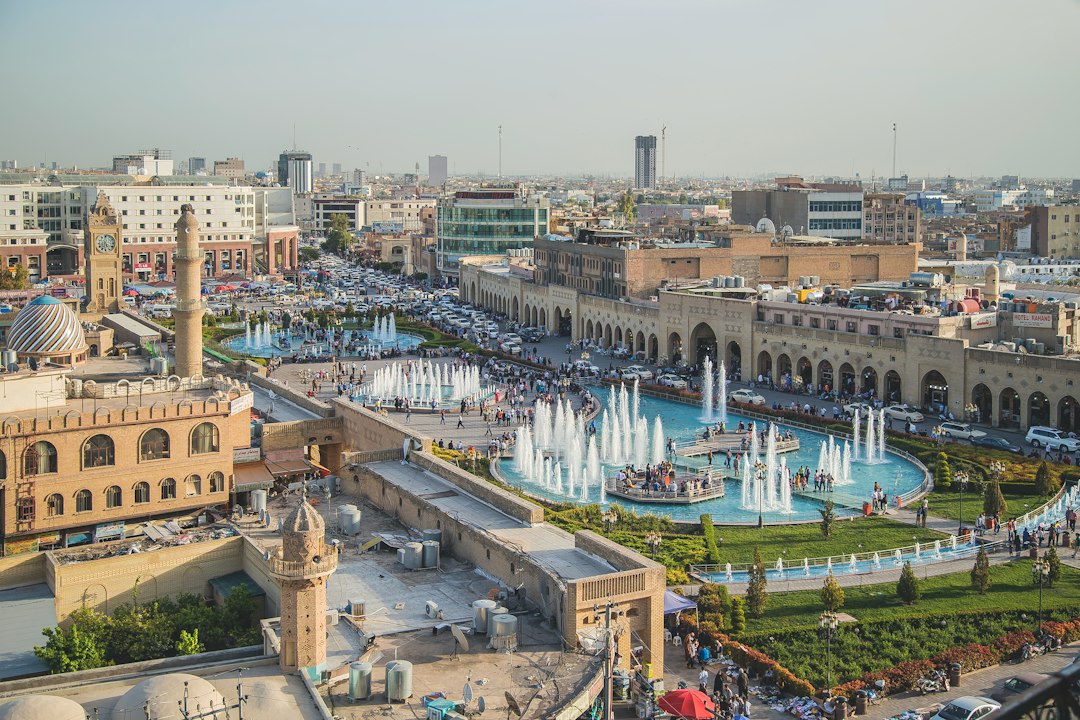
Featured image: Saad Salim via Unsplash. The photograph shows central Erbil and is illustrative; it does not depict the troop departure.
[…] already being followed in AskNovus’ World News coverage. Recent related reporting includes the end of the U.S.-led Iraq-based Operation Inherent Resolve mission and Iran’s receipt of a U.S. response to a proposed Hormuz […]