
Nvidia has launched an Open Agent Safety Platform designed to place enforceable software and hardware boundaries around autonomous AI agents. The platform combines an open-source runtime called OpenShell with a separate Sentry monitoring layer that can observe agent behavior outside the agent’s own operating environment.
Nvidia announced the platform on September 28 as companies deploy AI agents that can write code, call tools, access business systems and continue working for extended periods. Those abilities can make agents useful, but they also increase the potential consequences of bad instructions, software errors, credential exposure or behavior that moves beyond an assigned task.
What OpenShell does
Nvidia’s September 28 technical announcement describes OpenShell 0.1.0 as an open-source runtime that places each agent in an isolated sandbox. Administrators can define which files, services, application programming interfaces and credentials the agent may use.
The controls operate outside the agent workload, so an agent cannot simply rewrite its own permissions. Network requests can be inspected against declared policies, while kernel-level restrictions limit filesystem and process access. Nvidia says the software can work with multiple agent frameworks and can be extended to run on third-party computing platforms from Arm and Intel.
OpenShell also includes a policy prover intended to analyze whether a proposed permission change would expand access beyond an approved boundary. That can help security teams review what an agent is allowed to do before the new rule is applied.
Sentry adds a separate watchdog
The second major component is Nvidia Sentry, a reference design that runs on BlueField-4 data processing units. Nvidia’s newsroom release says Sentry monitors agent activity independently of the CPU environment running the agent and can quarantine an agent that attempts to move outside its authorized boundaries.
The architecture is designed to reduce the chance that an agent which compromises its own runtime could also disable the monitoring system. Nvidia calls this “out-of-band” enforcement because the watchdog operates on separate infrastructure.
The Associated Press reported on September 28 that the design may help contain some unsafe or unauthorized actions, but it does not solve every AI safety problem. The platform cannot guarantee that an approved task is correct, truthful or beneficial, and real-world effectiveness will depend on the quality of the policies organizations configure.
Industry participation and availability
Nvidia lists Anthropic, Cisco, CrowdStrike, Dell Technologies, Hewlett Packard Enterprise, Hugging Face, Microsoft, Palo Alto Networks, Red Hat, Salesforce, SAP and ServiceNow among the organizations participating in the broader effort. Some partners are integrating OpenShell into enterprise AI products, while others are contributing infrastructure or security expertise.
OpenShell is broadly available as open-source software. Sentry is a reference system design tied to Nvidia’s BlueField-4 hardware, which means the full layered approach will require compatible infrastructure rather than a software-only installation.
What the launch means
The announcement reflects a shift from relying only on an AI model to refuse harmful actions toward enforcing limits at the operating-system, network and hardware layers. That is similar to established cybersecurity practices such as least-privilege access, sandboxing and independent monitoring.
It is also a commercial platform announcement from Nvidia, not proof that autonomous agents can now be deployed without risk. Organizations still need human oversight, carefully tested permissions, incident response plans and independent security review.
The launch follows other large AI infrastructure developments tracked by AskNovus, including AMD’s agreement to acquire World Labs, HPE’s $1.2 billion Vultr order for AMD AI systems and Micron’s AI-memory outlook. More developments are available in AskNovus’ Technology section.
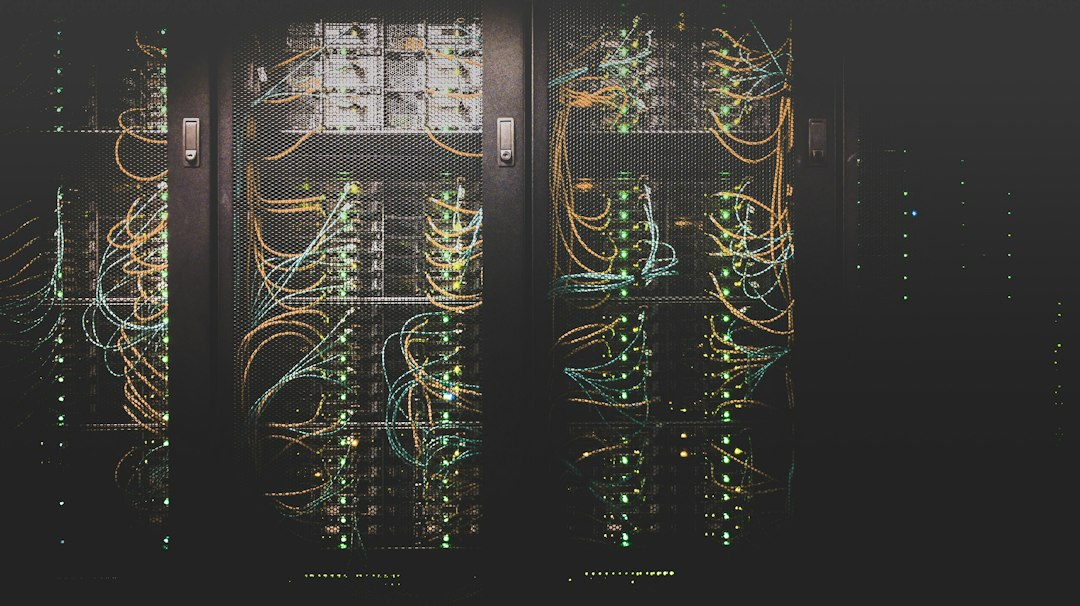
Featured image: Taylor Vick via Unsplash. The image is illustrative.
[…] The proposed complex highlights a broader challenge facing the technology sector: AI data centers require large, reliable power supplies, and utilities are planning new generation and transmission to meet expected demand. AskNovus recently examined the technology side of that expansion in its coverage of Micron’s AI-related memory outlook and Nvidia’s open agent-safety platform. […]