
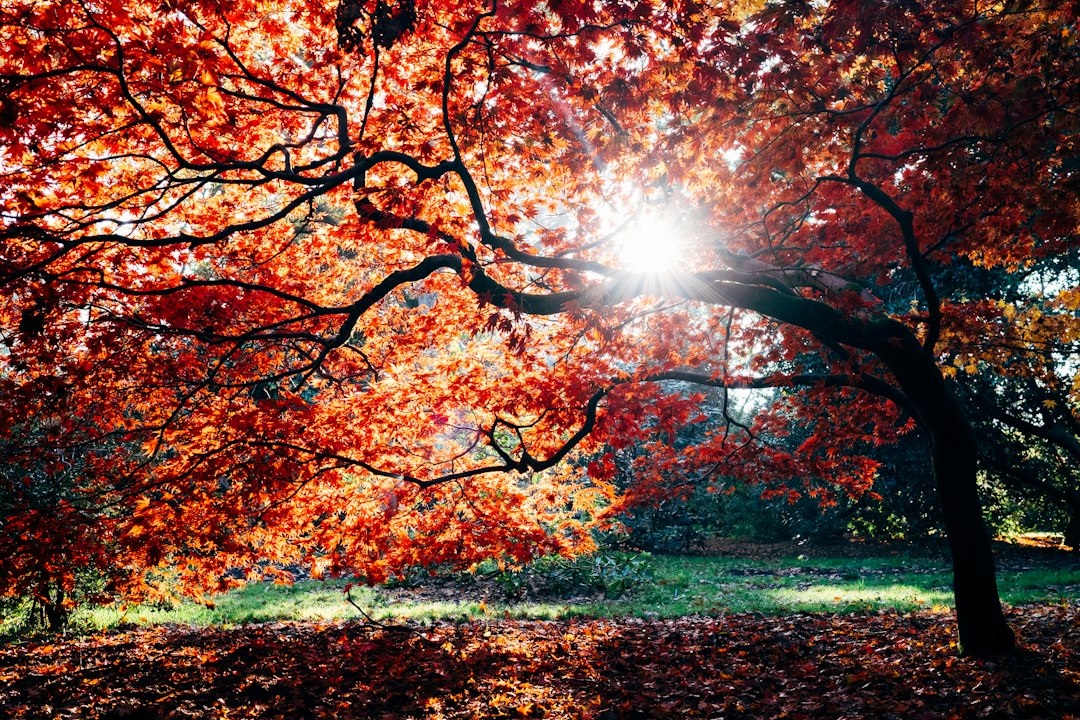
The fall display is not paint spreading across a leaf. It is a carefully timed change in pigments, chemistry, and the tree’s preparation for winter.
Green is only part of a leaf’s palette
During spring and summer, chlorophyll dominates the view. This green pigment is essential to photosynthesis, the process that lets a plant use sunlight to make sugars. Leaves also contain other pigments, including carotenoids that contribute yellow and orange tones, but the strong green signal usually masks them.
As autumn brings longer nights, many deciduous trees slow chlorophyll production and break down what remains. Green fades, revealing pigments that were already there. That is why aspens and yellow poplars often turn golden, while hickories lean toward bronze. The same basic idea—different substances absorbing and reflecting different parts of visible light—also helps explain why the sky looks blue, although the physical processes are different.
Where do the reds and purples come from?
Red and purple colors are linked to anthocyanins. Unlike the yellow-orange pigments that are present through the growing season, anthocyanins can be produced in the leaf during autumn. Sunny days support sugar production, while cool nights can slow the movement or use of those sugars. Under favorable conditions, that chemistry can encourage vivid red color.
Not every tree has the same pigment mix or response. Oaks may become red, russet, or brown; dogwoods can turn purplish red; and different maple species can range from yellow to scarlet. Even leaves on the same tree can differ because one receives more sun than another.
What weather makes a strong color season?
There is no universal recipe, but a pattern of bright days and cool—not freezing—nights often favors good color. Adequate moisture during the growing season helps trees remain healthy and keep their leaves. A hard early frost can damage leaf cells or cause leaves to drop before the full display, while drought and extreme heat may stress trees enough for leaves to brown or fall early. Heavy wind can shorten the show simply by stripping colorful leaves from branches.
This is why a single cold morning does not “turn on” all the trees at once. Day length is a dependable seasonal cue, while temperature and precipitation modify what happens next. You can follow local conditions more accurately by understanding the difference between a weather watch, warning, and advisory.
Why “peak color” is difficult to predict
Peak color is not one event across a state or even a large park. Tree species change on different schedules. Elevation and latitude alter temperature and day length, while slope direction changes sun exposure. Soil moisture, recent storms, pests, disease, and the genetic traits of individual trees add more variation.
On the Blue Ridge Parkway, for example, the National Park Service notes that terrain spans thousands of feet in elevation. Color can appear at higher, cooler locations and then progress toward lower elevations. That makes exact dates difficult to forecast far in advance—and explains why a map showing “peak” conditions is best treated as a broad planning guide, not an appointment.
Why leaves fall after the color show
Color change is part of a larger shutdown. Trees recover useful nutrients from leaves and prepare woody tissues for winter. Cells near the base of the leaf stem form a separation layer that eventually cuts the leaf off from the branch. Once the connection weakens, wind and gravity finish the job.
The fallen leaves are not useless. When allowed to break down in appropriate areas, they return organic matter to soil and can provide shelter for insects and other small wildlife. Shredded leaves can also be used as mulch or added to compost, provided diseased plant material is handled according to local guidance.
Sources
This original AskNovus explainer summarizes the public scientific guidance linked above. Featured image: Dan Freeman via Unsplash.