
CSL has agreed to pay $355 million upfront in a development and commercialization partnership with Switzerland’s Alentis Therapeutics for lixudebart, an experimental antibody being studied for rare kidney and liver diseases.
The agreement is worth up to about $1.6 billion before development funding, Reuters reported Monday, October 5, citing CSL. Alentis could receive as much as $1.2 billion in additional commercial milestone payments if the program advances and meets its targets.
The transaction does not mean lixudebart has been approved or that it has been shown to work in a larger patient population. The drug remains investigational and is being tested in a Phase 2 study.
How the CSL-Alentis deal is structured
CSL and Alentis plan to co-develop and co-promote lixudebart. If the drug reaches the market, the companies would divide global profits 55% to CSL and 45% to Alentis, according to Reuters.
The $355 million upfront payment is the guaranteed portion announced with the agreement. The larger headline value depends on future commercial milestones, and development funding is excluded from the stated maximum. Those distinctions matter because early-stage biotechnology partnerships rarely pay their maximum announced value unless clinical, regulatory and sales goals are achieved.
CSL shares rose as much as 1.3% in early Australian trading while the broader ASX 200 gained about 0.6%, Reuters reported. The market reaction was positive but limited, reflecting both the potential of the asset and the uncertainty that remains before late-stage trials and any regulatory review.
What lixudebart is designed to do
Lixudebart, formerly called ALE.F02, is a monoclonal antibody targeting exposed Claudin-1. Alentis says the treatment is designed to interrupt fibrotic signaling and help open the collagen barrier that builds up in damaged tissue.
The company’s pipeline lists kidney, liver and lung fibrosis as development areas. Its most advanced ongoing study focuses on ANCA-associated vasculitis with kidney involvement, an autoimmune disease in which inflammation can damage small blood vessels and lead to rapid loss of kidney function.
The U.S. clinical-trial registry describes RENAL-F02 as an 80-participant Phase 2 study comparing standard treatment plus lixudebart with standard treatment plus placebo. The study measures safety and kidney outcomes over time. Its estimated primary completion is June 2027, so the partnership is a bet on an asset that still has substantial clinical work ahead.
Why CSL is making the investment
The deal gives CSL access to a potential first-in-class fibrosis treatment while sharing development responsibilities with Alentis. It also broadens CSL’s rare-disease pipeline at a time when investors have been scrutinizing the Australian company’s growth outlook.
CSL has recently faced pressure after announcing plans to cut up to 3,000 jobs, reducing earnings guidance and delaying the proposed separation of its Seqirus vaccine business. An analyst quoted by Reuters said the new agreement creates potential upside but is not enough by itself to change the company’s long-term outlook.
The risk-reward profile is typical of large biopharma licensing: CSL pays heavily for access to a promising program, while Alentis retains meaningful economics and gains a partner with global development and commercialization capacity.
The transaction follows other large pharmaceutical bets on development-stage assets, including AstraZeneca’s $2 billion investment in Summit. It also illustrates the other side of biotechnology portfolio management, seen when Foghorn and Lilly ended the FHD-909 program after reviewing clinical data.
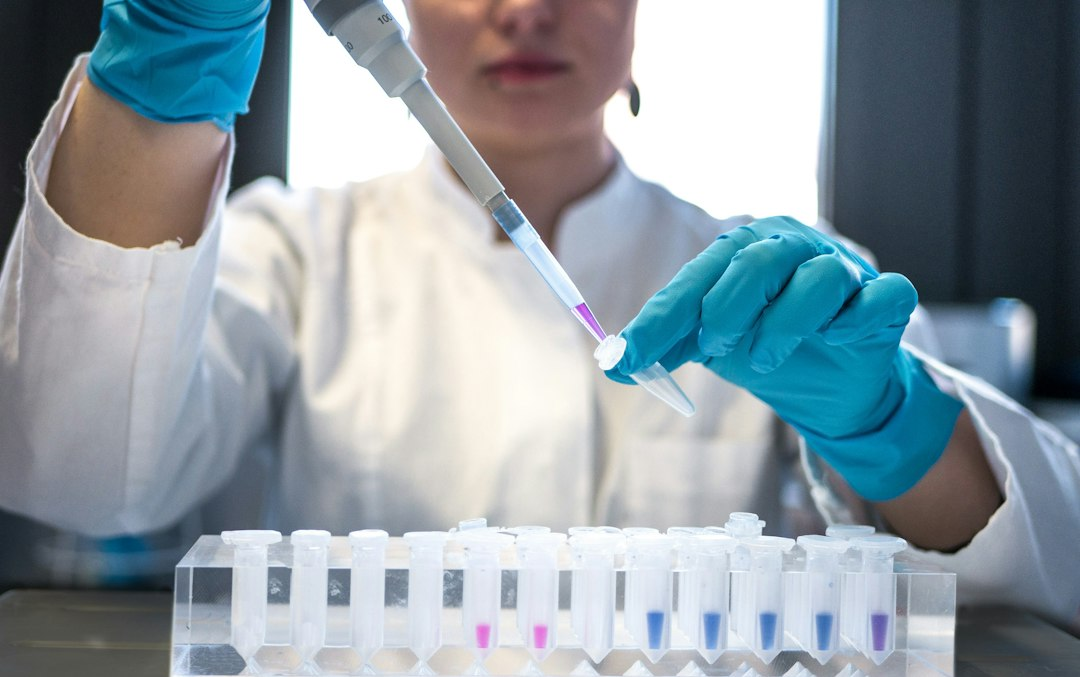
Illustrative laboratory photo by Julia Koblitz via Unsplash.
Sources
- Reuters, published October 4, 2026 and updated October 5, 2026
- Alentis Therapeutics pipeline, accessed October 5, 2026
- ClinicalTrials.gov RENAL-F02 study record, accessed October 5, 2026