
Published Oct. 6, 2026. University of Wisconsin–Madison physicist Francis Halzen has won the 2026 Nobel Prize in Physics for pioneering work that helped turn a cubic kilometer of Antarctic ice into a telescope for high-energy neutrinos.
UW–Madison announced the award Tuesday, saying the Royal Swedish Academy of Sciences recognized Halzen’s contributions to understanding astrophysical neutrinos produced by some of the universe’s most energetic events.
Why IceCube changed astronomy
Neutrinos are nearly massless particles that rarely interact with matter. That makes them difficult to detect, but it also allows them to travel vast distances with little disturbance and point scientists toward violent cosmic sources such as black holes and exploding stars.
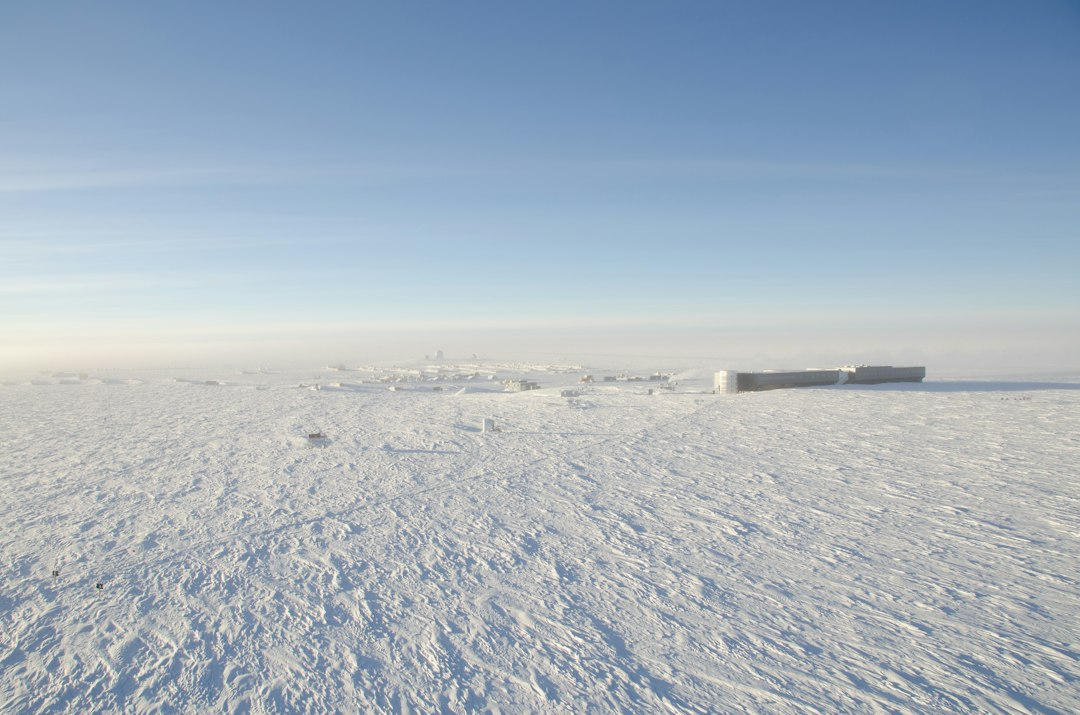
The IceCube Neutrino Observatory uses thousands of light sensors embedded deep in South Pole ice. The sensors record faint flashes produced when a neutrino interacts with matter in the ice. The observatory is funded by the U.S. National Science Foundation and operated by an international collaboration led from Wisconsin.
Reuters reported on Oct. 6 that Halzen, 82, developed the concept of using the South Pole’s clear ice to track the elusive particles, sometimes called “ghost particles.”
Discoveries linked to the observatory
IceCube announced the first detection of high-energy neutrinos from outside the solar system in 2013. Later observations helped associate neutrinos with an active galaxy and provided evidence of high-energy neutrino emission from the Milky Way.
The result helped establish “multi-messenger” astronomy, which combines light with particles and gravitational waves to investigate distant cosmic events. UW–Madison said IceCube recently completed its first major expansion since the detector was finished 15 years ago.
What comes next
Researchers continue using IceCube to identify cosmic accelerators and study neutrino properties. A larger proposed detector, IceCube-Gen2, would increase the observatory’s ability to detect rare high-energy events.
Follow Science News and Science for verified research and award developments.
Featured image: Photo by NOAA on Unsplash. Image is illustrative.