
U.S. factory activity remained in expansion territory in September 2026, with the Institute for Supply Management’s Manufacturing PMI registering 54.5. The reading was nearly unchanged from 54.6 in August and marked the ninth consecutive month above the 50-point line that separates expansion from contraction in the survey.
ISM released the September report at 10 a.m. Eastern on Thursday, October 1. The survey is based on responses from manufacturing supply executives and is designed to show the direction and breadth of change across the sector. A reading above 50 does not mean output grew 54.5%; it means the balance of survey responses was consistent with expansion.
Orders and employment improved
The new-orders index rose to 55.3 from 53.7, while the employment index increased to 52.7 from 51.2. Both remained above 50, indicating that more respondents reported improvement than deterioration in those areas.
Production stayed firmly in expansion territory at 56.7, although that was lower than August’s 58.3. Supplier deliveries registered 59.0, down slightly from 59.3. In the ISM framework, a supplier-deliveries reading above 50 means deliveries were generally slower, which can reflect stronger demand, transportation constraints or other supply pressures.
- New orders: 55.3, up 1.6 points.
- Production: 56.7, down 1.6 points.
- Employment: 52.7, up 1.5 points.
- Backlog of orders: 56.4, up from 51.8.
- New export orders: 50.9, narrowly in expansion.
- Imports: 51.0, also above 50.
Input-price pressure broadened
The most pronounced move was in the prices index, which climbed to 77.9 from 71.1. That figure is a diffusion index: it shows a broadening share of respondents reporting higher input prices, not a 77.9% increase in prices.
Inventories moved in the opposite direction. The index for manufacturers’ inventories fell to 48.6 from 50.6, shifting into contraction territory. Customers’ inventories remained low at 41.6. ISM has traditionally interpreted low customer inventories as potentially supportive of future orders, but the survey alone cannot establish how much replenishment will occur or when.
What the report does—and does not—show
The September result points to continued momentum across a broad range of factory indicators, but it is a qualitative survey rather than a direct tally of inflation-adjusted production. It should be read alongside later government releases on factory orders, industrial production and employment.
The strong prices reading adds evidence that manufacturers continued to encounter cost pressure in September. It does not identify a single cause. Commodity costs, transportation, tariffs, supply bottlenecks and demand conditions can all affect respondents differently, and the survey does not assign a precise share to each factor.
For additional context on current labor conditions, see AskNovus’s reports on September private-payroll growth and the latest weekly jobless claims. International readers can compare the U.S. result with Japan’s September Tankan survey.
Sources
- Institute for Supply Management, Manufacturing PMI, released October 1, 2026
- Reuters, “U.S. manufacturing steady in September; input prices increase,” October 1, 2026
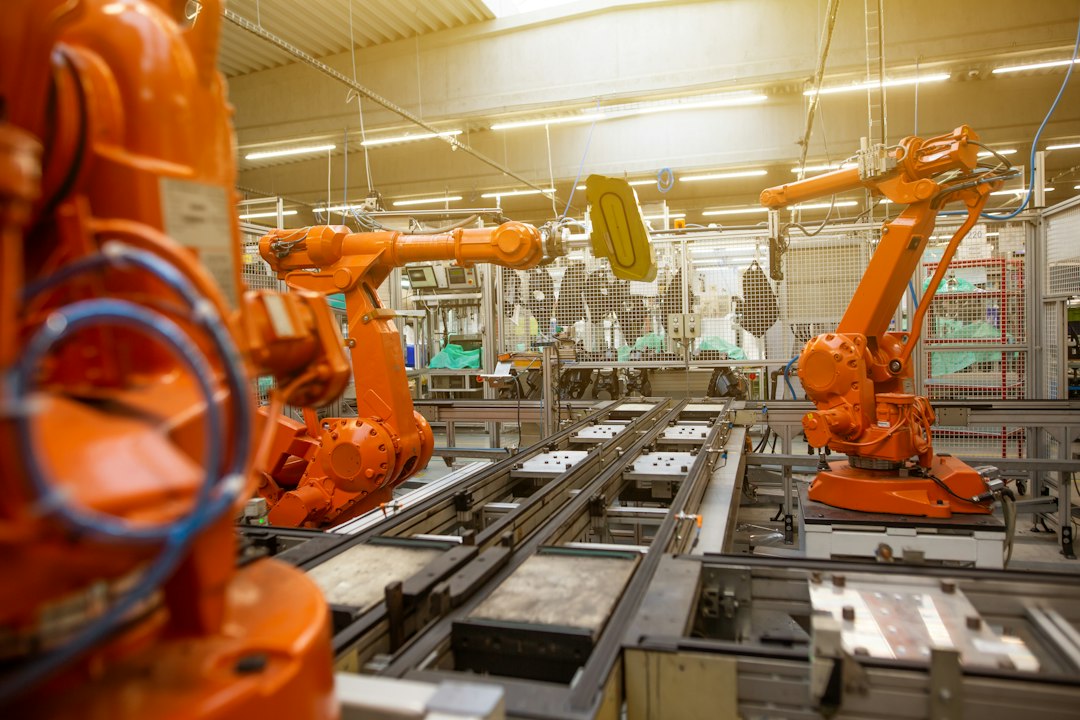
Featured image: Simon Kadula via Unsplash. The photograph is illustrative and does not depict a facility identified in the ISM report.