
The U.S. Navy has selected Boeing for a contract worth more than $20 billion to develop its next-generation F/A-XX carrier fighter, a major award intended to produce test aircraft and move the sixth-generation program toward the fleet in the 2030s.
Reuters reported the selection on September 29, citing people familiar with the decision. Fox News reported additional contract details on September 30, including that the full-scale development phase calls for multiple test aircraft.
What the contract does—and does not—cover
The award is a development contract, not a final purchase of an entire operational fleet. Its value covers engineering and manufacturing work needed to build and test the new aircraft. A future production decision, the number of jets eventually ordered and the program’s full life-cycle cost remain separate questions.
That distinction matters because large defense programs are usually funded in stages. The development award gives Boeing a central role now, but congressional appropriations, technical performance, testing and future Navy decisions will determine the program’s eventual scale. Reuters reported that Boeing prevailed over Northrop Grumman in the competition.
Congress had already provided $750 million for the F/A-XX program and another $1.4 billion in related funding, according to Reuters. Those appropriations helped keep the program moving while the Navy evaluated competing proposals.
How F/A-XX fits into the carrier air wing
The Navy expects F/A-XX to begin replacing the F/A-18E/F Super Hornet and EA-18G Growler families in the 2030s. The planned fighter would operate alongside the F-35C and unmanned aircraft rather than immediately displacing every current platform.
Public descriptions emphasize longer range, advanced sensors, networking and the ability to work with autonomous systems. Many performance details remain classified or have not been finalized. Claims about exact capabilities should therefore be treated as program goals until they are demonstrated in testing.
The award follows Boeing’s separate selection for the Air Force’s F-47 fighter program, giving the company leading positions in two closely watched sixth-generation efforts. It also arrives as Boeing manages large commercial-aircraft commitments and defense supply-chain pressures. Those demands make execution—hiring, engineering capacity and supplier performance—as consequential as the initial contract announcement.
What happens next
Boeing and the Navy will move through design maturation, prototype construction and flight testing. The 2030s fielding target is a schedule goal, not a guarantee. Complex military aircraft frequently encounter technical changes, budget revisions or testing delays.
For readers following the defense-technology and industrial implications, the most important near-term milestones will be congressional funding, Navy program updates and evidence that the test-aircraft schedule remains intact. AskNovus will distinguish those confirmed milestones from projections in its Technology News and Business coverage. For related defense technology, see our report on the Pentagon’s new drone command structure.
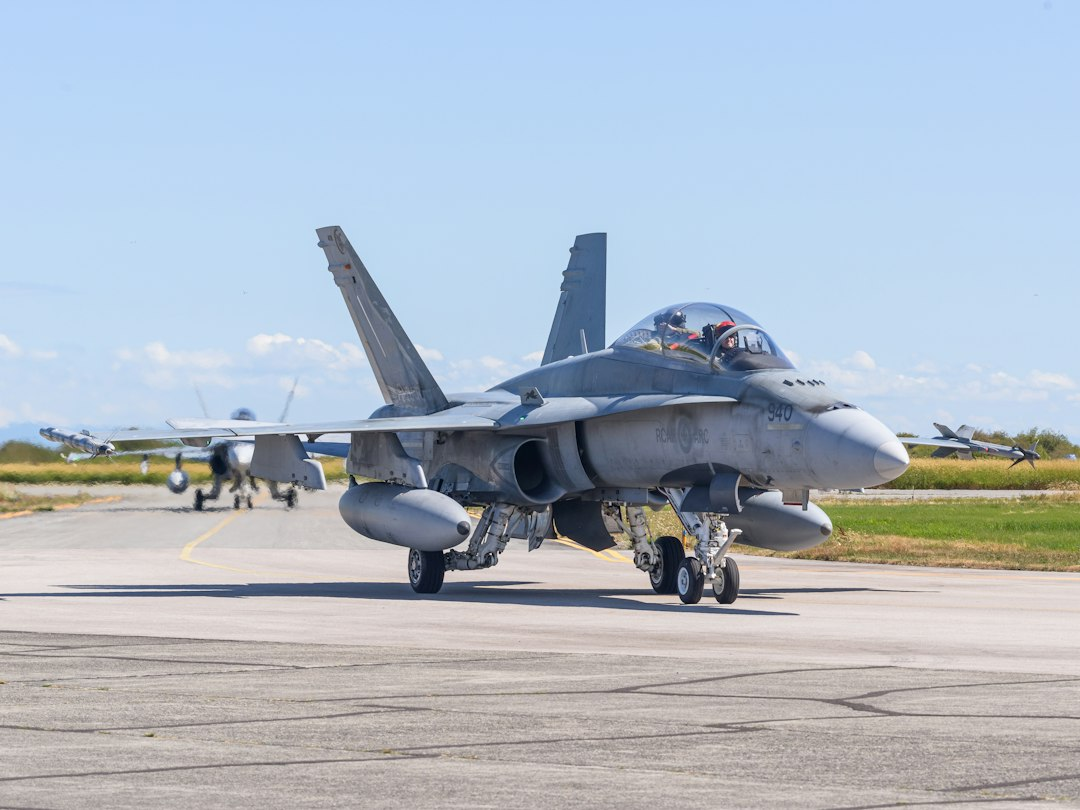
Featured image: Albert Stoynov/Unsplash. The photograph shows military fighter jets and is illustrative; it does not depict the unbuilt F/A-XX.