
September 30, 2026: Oil and gas activity increased across the Federal Reserve Bank of Dallas district during the third quarter, but producers reported greater uncertainty about future prices, according to the bank’s latest Energy Survey.
The survey covers companies headquartered or operating in Texas, northern Louisiana and southern New Mexico. The Dallas Fed collected responses from September 16 through September 24 from 125 energy companies: 83 exploration and production firms and 42 oilfield-services firms.
Production rose, but planning became harder
The survey found that oil and gas output increased during the quarter. Respondents linked additional drilling and production partly to higher crude prices, while also describing the wide price swings as a problem for long-term investment decisions.
The uncertainty index among exploration and production companies rose during the quarter, the Dallas Fed reported. That is a measure of how companies view business conditions; it is not a forecast that production will fall.
Survey respondents’ average year-end expectation for West Texas Intermediate crude was $88 a barrel. Individual forecasts ranged from $70 to $126. Their average forecast for Henry Hub natural gas was $3.29 per million British thermal units. These are survey expectations collected during a specific period, not live prices or guarantees.
What the survey does—and does not—show
The Dallas Fed Energy Survey is a regional business survey rather than a complete census of U.S. producers. Its results provide a timely view of activity, hiring, costs, capital spending and sentiment in the Eleventh Federal Reserve District, an important oil-and-gas region.
The survey cannot establish that one factor caused production to rise. Commodity prices, well economics, pipeline capacity, labor and equipment costs, policy changes and geopolitical disruptions can all affect company decisions.
Separate weekly data released by the U.S. Energy Information Administration showed U.S. crude production at 13.955 million barrels per day for the week ending September 25, according to Reuters. Weekly estimates can be revised and should not be treated as a final annual production figure.
Why consumers and businesses should watch the results
Energy production and refining conditions can affect transportation costs, manufacturing expenses and household fuel bills, although changes do not pass through immediately or evenly. The survey’s wide oil-price forecast range illustrates how uncertain executives consider the rest of 2026.
AskNovus is also tracking the government’s offer to lend up to 40 million barrels from the Strategic Petroleum Reserve. That is a separate emergency-loan program and should not be confused with the Dallas Fed survey.
Sources
- Federal Reserve Bank of Dallas, third-quarter 2026 Energy Survey, September 30, 2026
- Federal Reserve Bank of Dallas, Energy Survey methodology
- Reuters, September 30, 2026
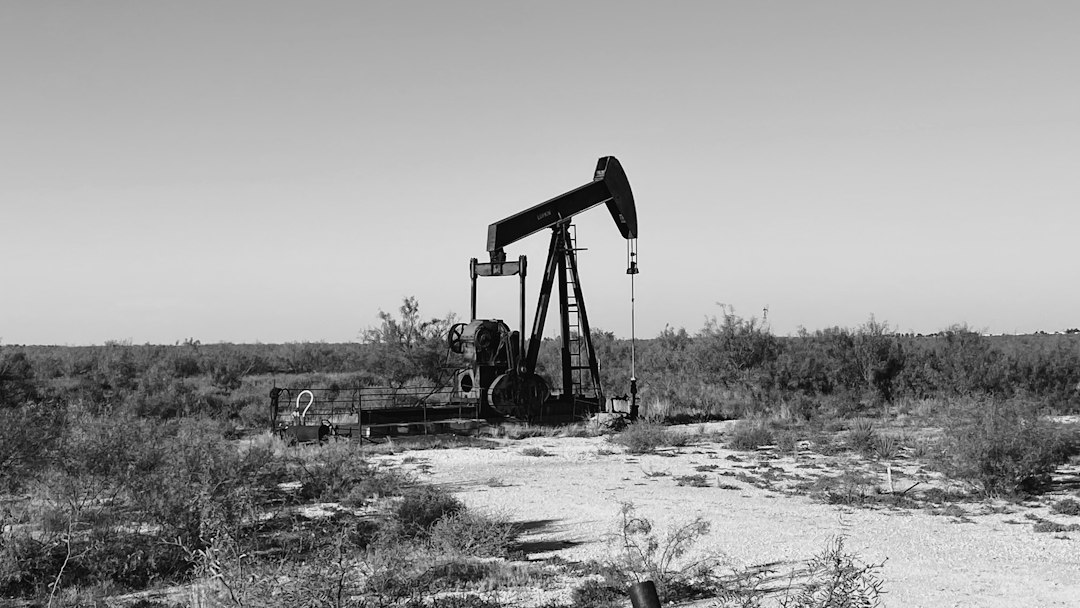
Featured image: oil pump jack photographed by Delfino Barboza on Unsplash. The image is illustrative.