
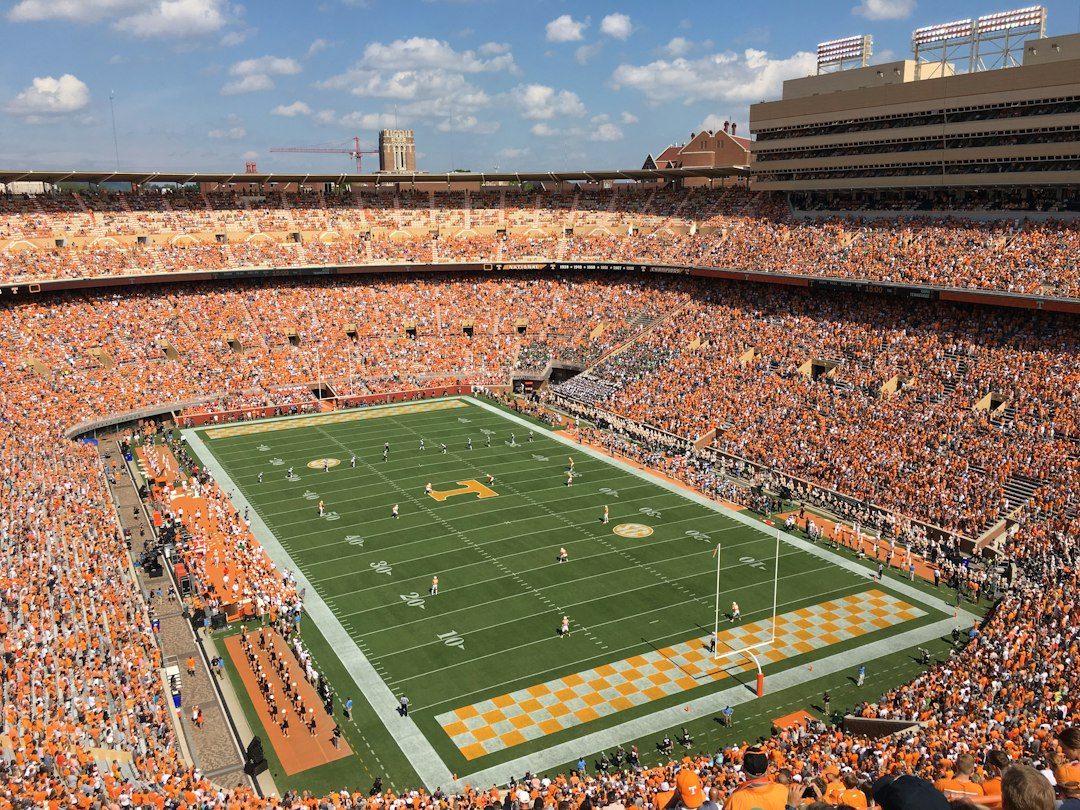
The College Football Playoff uses a 12-team bracket. The selection committee ranks teams, fills the field under the published format and assigns the matchups that lead from campus first-round games to the national championship.
At a glance
- The field contains 12 teams selected under the CFP’s published rules.
- Four first-round games narrow the field to eight.
- Quarterfinals and semifinals are played through the bowl rotation before the championship game.
Selection and seeding
The CFP selection committee releases rankings during the season and sets the final bracket after conference championship games. The official CFP site explains the qualification and seeding rules used for the 12-team field. Because policies can be adjusted between seasons, the current-season bracket and FAQ should be treated as the final word.
The first round
The opening round features four games at campus sites, hosted under the CFP’s seeding rules. Those winners join the four teams that did not play in the opening round, producing the eight-team quarterfinal field.
Quarterfinals, semifinals and championship
The quarterfinals and semifinals are assigned to designated bowl games. Winning teams continue through a single-elimination bracket, and the two semifinal winners meet in the national championship game at a separately selected site.
What to watch during the season
Conference races, strength of schedule, head-to-head results and the committee’s weekly rankings all shape the discussion. But projections are not the bracket. Automatic qualification and seeding depend on the official final rankings and the CFP’s current rules.
The CFP said in September 2026 that the current format remained a 12-team bracket while potential future expansion continued to be evaluated. Readers should distinguish proposals for later seasons from the rules governing the current bracket.
Sources
- College Football Playoff: Official FAQ
- College Football Playoff: September 2026 statement
- College Football Playoff: Official site
AskNovus links readers to the original official sources so you can review the underlying information directly.
This is an original AskNovus explanation based on the linked sources. It does not reproduce a publisher’s article. Featured image: Steve DiMatteo via Unsplash. Information may change after publication; check the official sources for the latest details.