
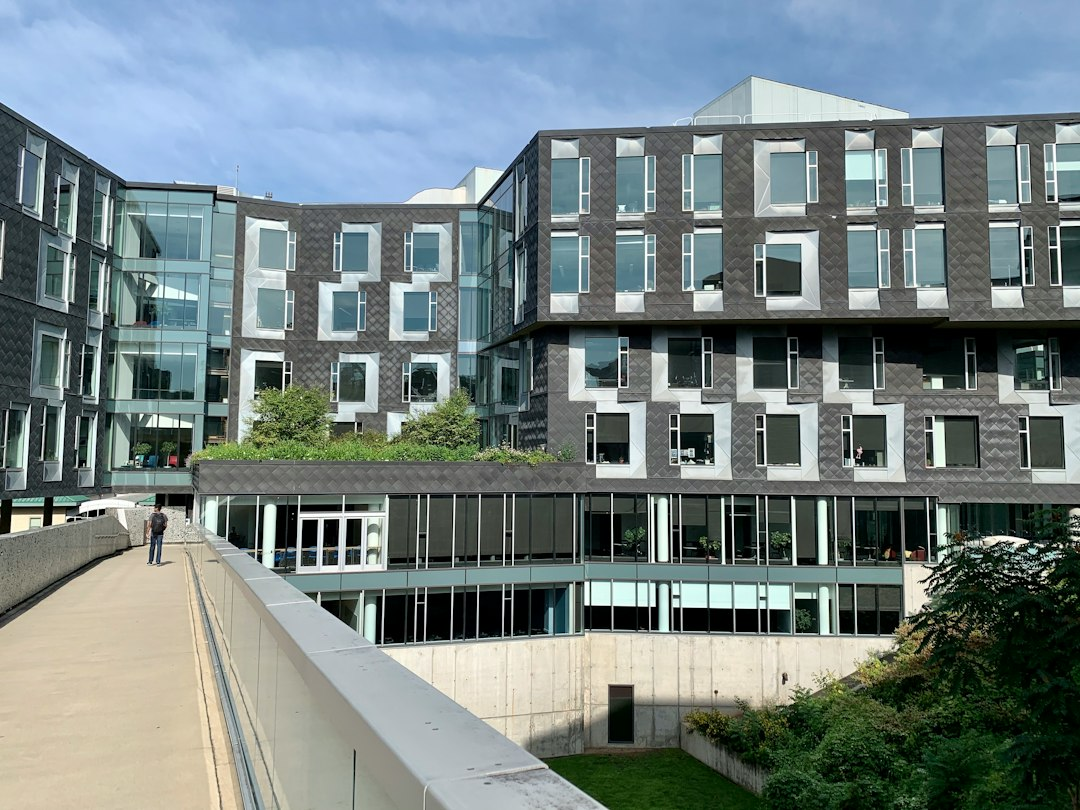
PITTSBURGH — September 30, 2026: Citadel founder and CEO Ken Griffin will give Carnegie Mellon University $3 billion, the largest individual gift in higher-education history, according to the university.
The commitment divides into two major investments: $1 billion for Carnegie Mellon’s Pittsburgh campus and $2 billion to create Carnegie Mellon University Miami on a planned 35-acre site in Miami’s Wynwood neighborhood.
Construction in Miami is scheduled to begin in 2027. The university expects to begin enrolling graduate students in 2028, subject to regulatory approvals, with its first undergraduate class planned for 2032.
How the $3 billion will be divided
Of the $1 billion designated for Pittsburgh, $500 million will support the university’s highest priorities and $500 million will go to its School of Computer Science. The school will be renamed the Kenneth C. Griffin School of Computer Science.
The remaining $2 billion will support CMU Miami. Carnegie Mellon says the new campus will be built around interdisciplinary work on human health and biological discovery, national security, energy and climate resilience, and advanced manufacturing.
Griffin will also join the university’s Board of Trustees.
Plans for the Miami campus
When fully developed, Carnegie Mellon expects the Miami campus to serve more than 3,500 undergraduate, master’s and doctoral students. The plan also calls for nearly 300 faculty members and more than 600 staff.
The proposed campus is intended to combine education and research rather than operate as a small satellite program. University plans include space for industry research laboratories and venture studios, with students and faculty working alongside outside partners.
The timeline and final design remain subject to government and institutional approvals. The university’s announcement uses conceptual renderings and describes the 2028 opening as a current plan rather than a guaranteed completion date.
Why Pittsburgh remains central
Carnegie Mellon President Farnam Jahanian said Pittsburgh would remain the university’s center of gravity. The Pittsburgh share of the gift is intended to strengthen the existing campus while expanding computer-science research and education.
The university has long-standing programs in artificial intelligence, robotics, machine learning, cybersecurity, engineering and the arts. The new funding could expand work in those areas, but Carnegie Mellon has not yet published a project-by-project spending plan for the flexible $500 million portion.
A record philanthropic commitment
Carnegie Mellon and Fox Business both described the gift as the largest ever made by an individual to a higher-education institution. The university also called it the largest philanthropic commitment of Griffin’s career.
Griffin founded Citadel in 1990 and later established Citadel Securities. His giving has included education, health care, scientific research, cultural institutions and civic projects.
The record designation is based on the announced commitment. As with other large multi-year gifts, implementation will unfold over time as campus construction and university programs advance.
Economic and institutional implications
A campus employing nearly 300 faculty and more than 600 staff would represent a significant new institutional presence in Miami. The university says it plans to work with local communities and partners as it develops the site.
For Carnegie Mellon, the gift simultaneously expands its geographic reach and reinforces its Pittsburgh base. The Miami plan also places advanced computing and applied research at the center of a new campus rather than adding those programs after construction.
Follow major corporate and institutional developments in Business and technology expansion in Technology. AskNovus also recently covered Micron’s latest AI-memory results and forecast.
Sources
- Carnegie Mellon University, September 30, 2026: gift terms and campus plan
- Carnegie Mellon president’s announcement, September 30, 2026
- Fox Business, September 30, 2026: independent reporting and gift breakdown
Featured image: Jonathan Speek/Unsplash. Carnegie Mellon’s Gates Center for Computer Science.